


The New Vologda Region
The Vologda Region is where the great Russian North begins. For centuries, the life of this region has absorbed many of the most important events in the country's history. And it does not matter when they happened: 600 years ago or in the middle of the last century – the people of Vologda know and honour the history of their land. There is a deep understanding here that all these milestones are equally important in the making of our state.
Today, we will tell you how, through a modern urban environment, the residents and tourists of the region can discover the rich historical and cultural heritage of Vologda and Cherepovets.
Vologda
Let's start with Vologda. Yevkovka Park. This public space was renovated in 2024. The park received its name because the village of Yevkovo once stood here. The village was named after the river Yevkovka, which flowed nearby. Later, in the 1930s, a settlement for workers of the flax mill was built on the banks of the river. A few years later, the city limits expanded once again, and the settlement became part of Vologda. The park itself appeared in the 1970s thanks to the efforts of local residents. These and other stories and events were taken into account when developing the park's distinctive style.

In the centre of the city, at the intersection of three branches of government, lies a newly renovated public space named after one of the greatest political figures of the Region – Drygin Square. Renovated in 2024, the square is named in honour of Anatoly Drygin, the First Secretary of the Vologda Regional Committee of the CPSU in Vologda. This Soviet statesman and party leader took charge of the Vologda Region in 1961 and, over his 25 years in office, made it one of the fastest‑developing regions in the country. Under his leadership, great changes took place in many sectors of the region. New roads, schools, hospitals, and quality housing were built; the Cherepovets Metallurgical Plant, as well as the bearing factory and the optical‑mechanical plant in Vologda, were constructed. During Anatoly Drygin’s time in office, agriculture also reached its peak. A monument to this statesman was built in Drygin Square in 2025.

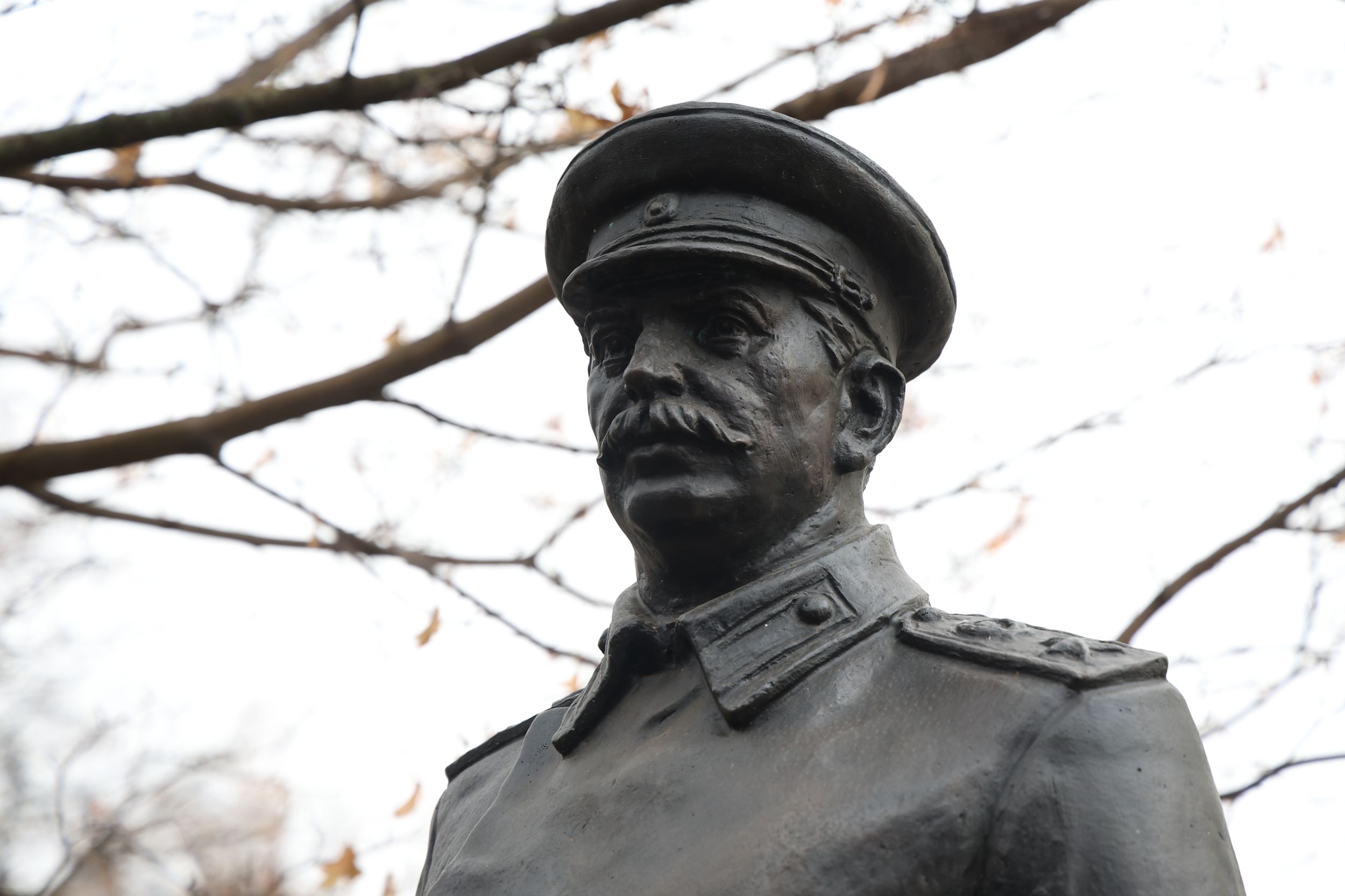
Literally just across the road from this public space, at 33 Marii Ulyanovoy Street, a monument to Joseph Stalin has been built. The location chosen for the monument to the Head of the Soviet Union is no coincidence. It was in this historic building that Joseph Stalin lived from 1911 to 1912 – during his Vologda exile. Today, this building houses a branch of the Vologda Museum‑Preserve – the "Vologda Exile" Museum. A monument to the statesman originally placed by this house in the late 1930s, but was dismantled in the late 1950s. The new monument, cast in bronze, was installed in its original location in March 2025. Its creator is Konstantin Kubyshkin, a member of the Moscow Union of Artists and a sculptor.
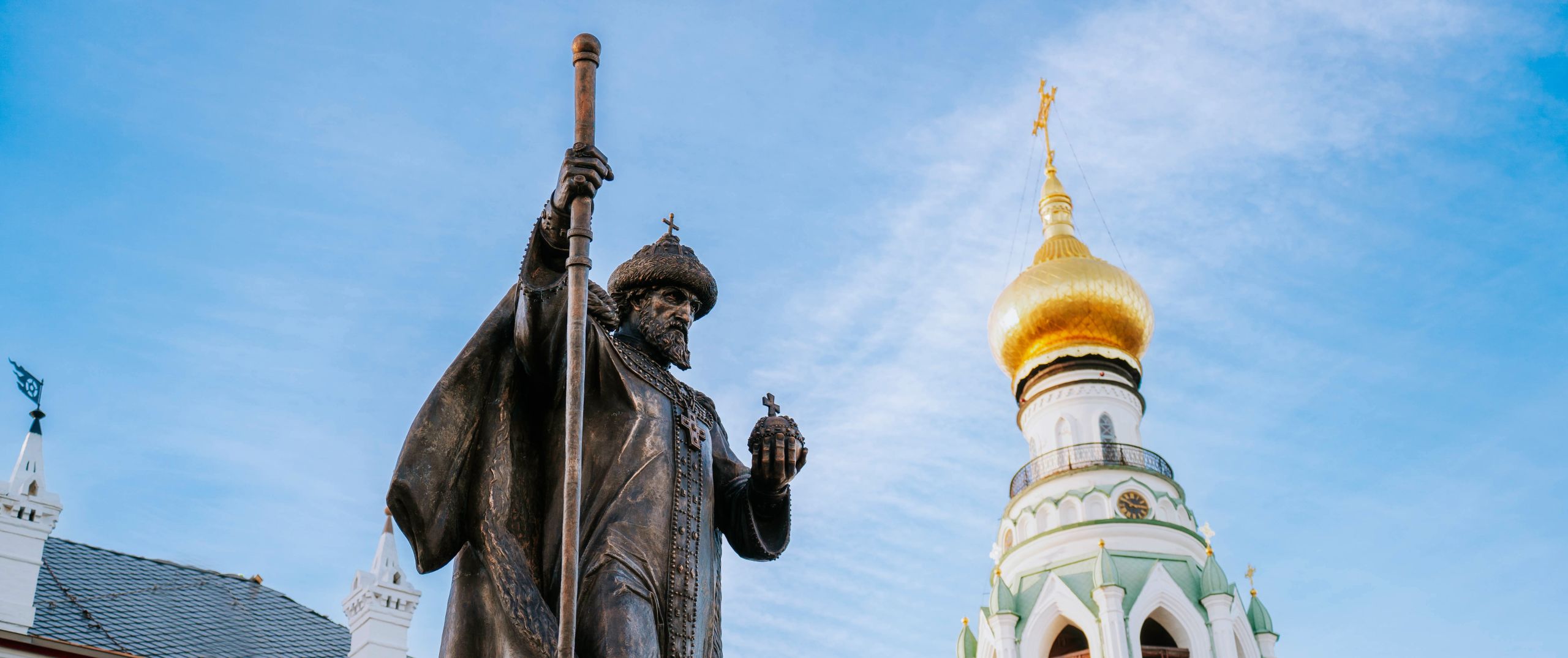
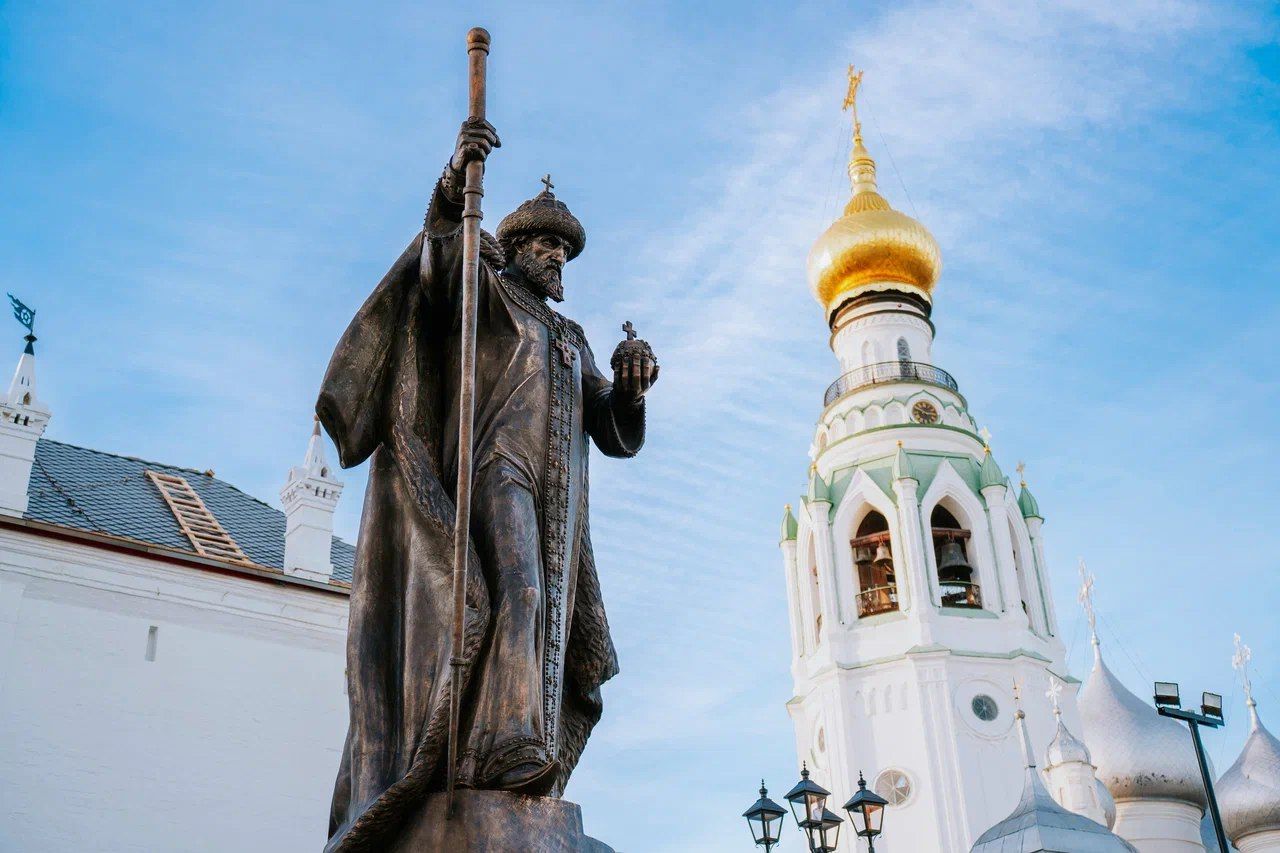
Also, in 2025, on National Unity Day, a monument to Ivan the Terrible was unveiled. Although the tsar never lived in Vologda, he visited the city twice — in 1553 and 1571. The city played an important role during the reign of Ivan IV — Vologda was part of the oprichnina, trade routes passed through it, and significant supplies were stored there. The tsar built a fortress in the city and laid the foundation for Vologda’s most recognizable landmark, St. Sophia’s Cathedral. According to legend, Ivan Vasilyevich planned to move the capital to Vologda, but while the cathedral was under construction, a piece of plaster fell on him. The tsar took this as a bad omen and left the city abruptly.
The trees in Teatralny Garden (Theatre Garden), which were planted between 1954 and 1955 along Oktyabrskaya Street – from the Youth Theatre building to Batyushkov Street – were renovated this summer. Illuminated sculptures in the form of a piano, a saxophone, and a harp allude to the region's cultural life, while the avenue is adorned with bright festive lighting, highlighting the region's achievements in the arts – arts to which Melpomene and Thalia have been so gracious. Today, Teatralny Garden in Vologda is one of the favourite spots for an evening stroll among residents and tourists to the regional capital.

A nod to the history of aircraft construction can be found in Ilyushin Square. It is named in honour of Sergey Ilyushin, a native of Vologda and the aircraft designer who created the famous Il‑series aircraft during the Soviet era. The public space was renovated several years ago. It echoes the shape of a runway, and at its very threshold stands a model of a legendary aircraft, seemingly taking off into the sky.

Cherepovets
Let us continue our exploration of aviation history, this time in Cherepovets. Here, at the intersection of Sheksninsky Prospekt and Yuzhnoye Shosse, a monument "To the Defenders of Our Motherland" was installed on 12 June 2024. The location chosen for the Su‑27 fighter jet is no accident. Not far from here, from 1933 to 1981, the Maturino airfield was situated. During the Great Patriotic War, it became the base for the 740th Fighter Aviation Regiment. It was this regiment that escorted transport aircraft into blockaded Leningrad and defended the city from enemy air raids.
_2500x0_53f.jpg)
A reminder of the great feat of our compatriots is also provided by the monument to the graduates of the Lepel and Cherepovets military schools. It was installed in the Kursantskiy (Cadets') Square to mark the 80th anniversary of the Victory. The monument owes its name to the events of the war years. In 1941, the Lepel Infantry School was evacuated to Cherepovets from Belarus. Over the 17 years of its operation in Cherepovets, it trained and graduated 8,800 officers, among them 18 Heroes of the Soviet Union and 13 generals. Today, this is the Military University of Radio Electronics, awarded the Order of Zhukov. The composition of the memorial reflects three military eras in the history of the Russian state. One part is dedicated to the heroes of the Great Patriotic War, the second to the internationalist warriors who took part in the Afghan campaign, and the third to the soldiers of the Special Military Operation. The design of the monument was created by the Grekov Studio of Military Artists.

You can take in all the milestones of Cherepovets's history along the newly renovated Oktyabrskaya Embankment. Begin your journey at the monument to Saints Afanasy and Feodosy of Cherepovets. It was they who founded the Resurrection Cherepovets Monastery on the banks of the river Yagorba in the 14th century – many centuries before the city itself was founded. On the opposite bank of the river Sheksna, there is a reference to yet another era: the only surviving wooden estate of the Galsky family. And from the new Ferris wheel, you can gaze upon the present day – a young and picturesque industrial city.
 череп_2500x0_53f.jpg)
Where else can you take a stroll in Cherepovets and learn about its history? At Gagarin Square, of course. This area was named after the first cosmonaut precisely in 1961, and now festive events are held here every year on 12 April. In 2025, the square was renovated and, like Vologda's Teatralny Square, adorned with elegant festive lighting.
Now you know for certain that even a walk through a modern, well‑kept public space hides within it many meanings from the past – you simply need to look a little deeper.
_2500x0_53f.jpg)


